An astronaut, a SecDef, and a Khrushchev
On March 3rd, 2000, a man named Gregory Nemitz registered a claim to some land. The land was asteroid 433 Eros, which by his math contained $492,187,500,000,000,000 worth of platinum.1
The next year, NASA landed the NEAR Shoemaker probe on Eros. Nemitz promptly sent NASA a $20 parking ticket. NASA dismissed the fine, citing the Outer Space Treaty’s ban on owning celestial bodies.
I found that story in high school — the trailhead was Vsauce’s “Who Owns The Moon?”, which walks through the Outer Space Treaty and drops the idea that banning ownership might have quietly slowed exploration itself — and I could not let it go. Because underneath the joke is a real question: who owns space? Nobody, right? But why nobody? Who decided? And there’s exactly one place on Earth where humanity has already run the experiment: Antarctica. At the height of the Cold War, every claimant power agreed to set aside an entire continent for science. No weapons, no territorial claims, no mining.2 How did that happen? And is it the template for space?
Three of us decided to find out: me, Adam Linssen, and Elijah Gross-Sable. That’s the first thing to know about this story. We made documentary films together for National History Day all four years of high school, and I spearheaded them, but nothing about what follows was a solo act. The film we made junior year was called “The Antarctic Treaty: A Sacrifice for Otherworldly Exploration,” and our method was simple: ask the people who were there.
 The title card of the cut that won California. Ten minutes long, because National History Day says so.
The first yes was a space lawyer
The first interview we landed wasn’t the astronaut, and in hindsight it might have been the biggest get on the list. Sagi Kfir was general counsel and a co-founder of Deep Space Industries, an honest-to-goodness asteroid-mining company — which made him, by most accounts, the first lawyer in history employed by a company whose business was mining space. And his timing was absurd: months before he sat down with us, the SPACE Act of 2015 had been signed into law — the first U.S. statute granting companies property rights over materials extracted in space — legislation Kfir himself had worked to create and pass. His whole job had been answering investors who asked, “are you allowed to extract these minerals? Can you guarantee the United Nations isn’t going to shut you down?”
Read that against the film’s opening: Nemitz claimed an asteroid and got laughed off with a dismissed parking ticket. Fifteen years later, the co-founder of an asteroid-mining company helped write the law that made a version of Nemitz’s idea legal. And that man gave two hours by the airport to three high schoolers, because our question — who owns space, and what does ownership do to exploration — was the exact question his career was built on.
 Sagi Kfir in the film, lower-third and all. The space attorney took three high schoolers seriously enough to put on a tie. To him, the Nemitz parking ticket wasn’t a joke. It was his field. People are already lawyering over asteroids, and the question our film was asking wasn’t hypothetical to anyone in his office.
He also did the thing that separates a good source from a great one, which is hand you the next source.
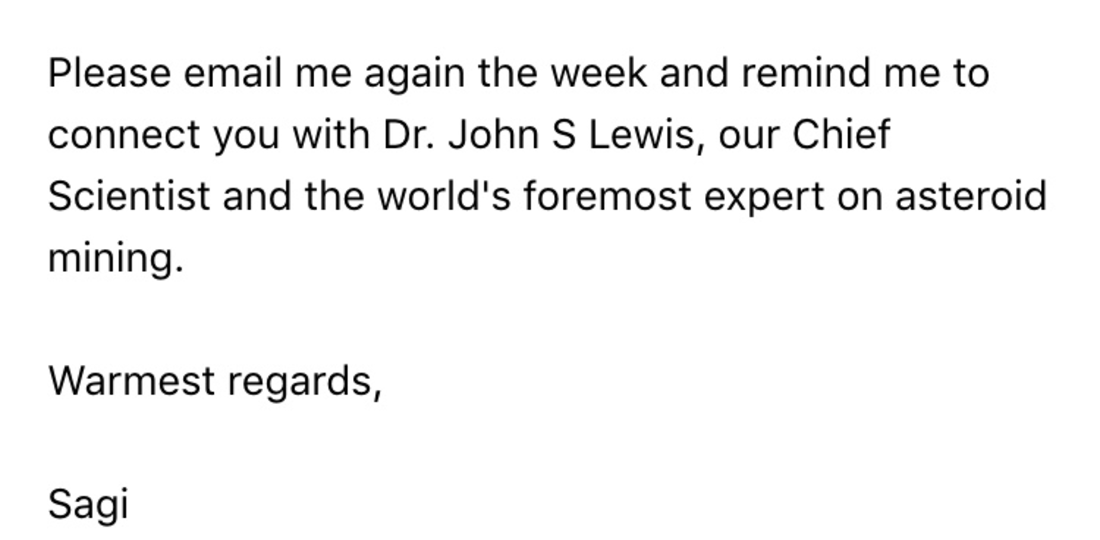 The last lines of a reply from Sagi Kfir. He is a co-founder of the company, we are three high schoolers with a camcorder, and his instinct is to route us to his chief scientist — a planetary scientist who literally wrote the book on mining asteroids — and then ask US to remind HIM. That is what taking someone seriously looks like: not a nice reply, a next step — with the follow-up assigned to you.
That thread is also, in a real sense, where the asteroid work started.
He gave us something else, too: his company’s footage. Deep Space Industries had commissioned renderings of what asteroid mining would actually look like, and we put them in the film.
More important than the interview itself: he referred us to other people to talk to. Someone believed in the project. I know exactly what that meant to me at the time, because the thank-you letter I wrote him is still in the college-applications folder on my hard drive, and seventeen-year-old me says it plainly:
As the first interview we conducted, I wanted also to thank you for the way that you inspired and motivated us with this project. If it wasn’t for you, it might not have gotten finished. The way that you referenced us to other people to interview showed us that someone believed in the project. That was exciting.
The same letter reports that the film won the California state competition and was headed to nationals in DC, and then, near the end, quietly announces the next domino: “I’m working on an astrophysics project at Yale this summer that deals with near-Earth asteroids.” That project became the asteroid paper. The documentary caused the science, and the letter is the receipt, signed Ben Clark.3
The cold emails
Here is the theory three high schoolers operated on: the people who made history are mostly still alive, mostly have email, and mostly are not being asked about the thing they’re proudest of. So we asked. Short, specific emails, honest about who we were: high school students making a History Day documentary about the Antarctic Treaty and the future of space law, requesting an interview.
We were not ignored. The confirmations arrived on official letterhead, into a high schooler’s inbox:
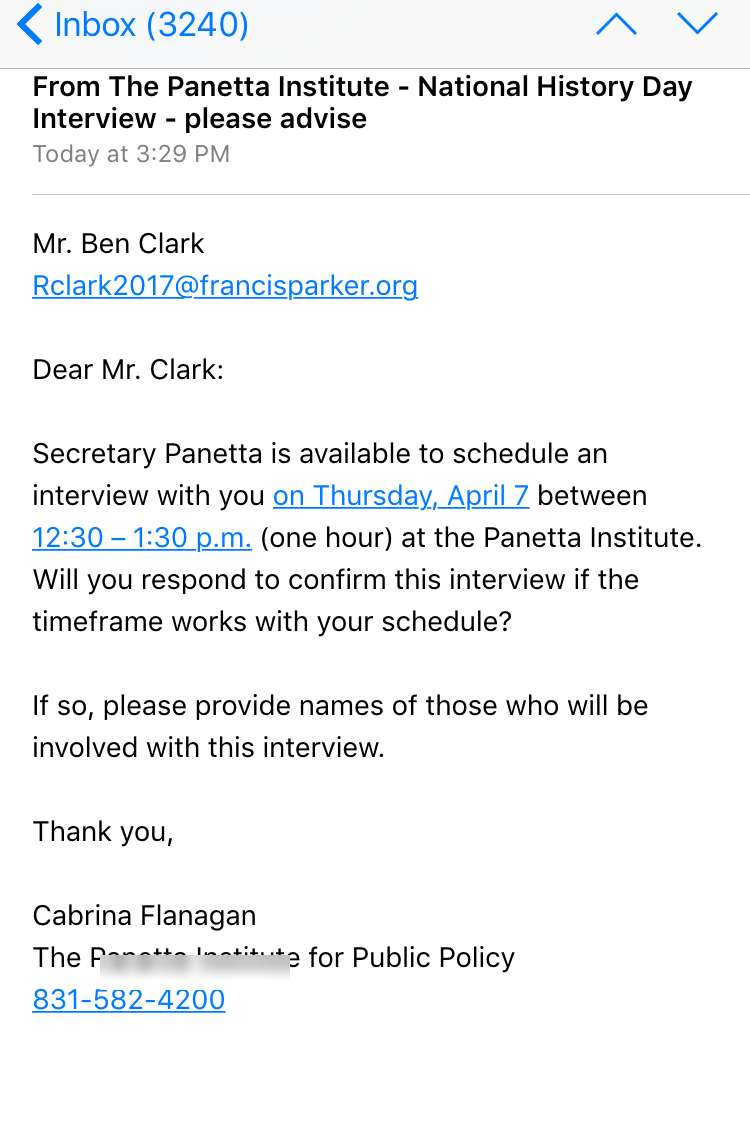 The Panetta Institute, replying to [email protected]: “Secretary Panetta is available to schedule an interview with you… at the Panetta Institute.” You send the email like an adult and the calendar treats you like one.
You came to this post for the three names in the title, so here they are, with dates. Sergei Khrushchev, son of Nikita Khrushchev, who watched the Cold War from inside the Kremlin as his father ran one side of it: sat down with us in person on April 8th, 2016. David Eisenhower, grandson of the president who signed the Antarctic Treaty: in person, April 12th — and I photographed his office door on the way in, because I did not fully believe the name plate.
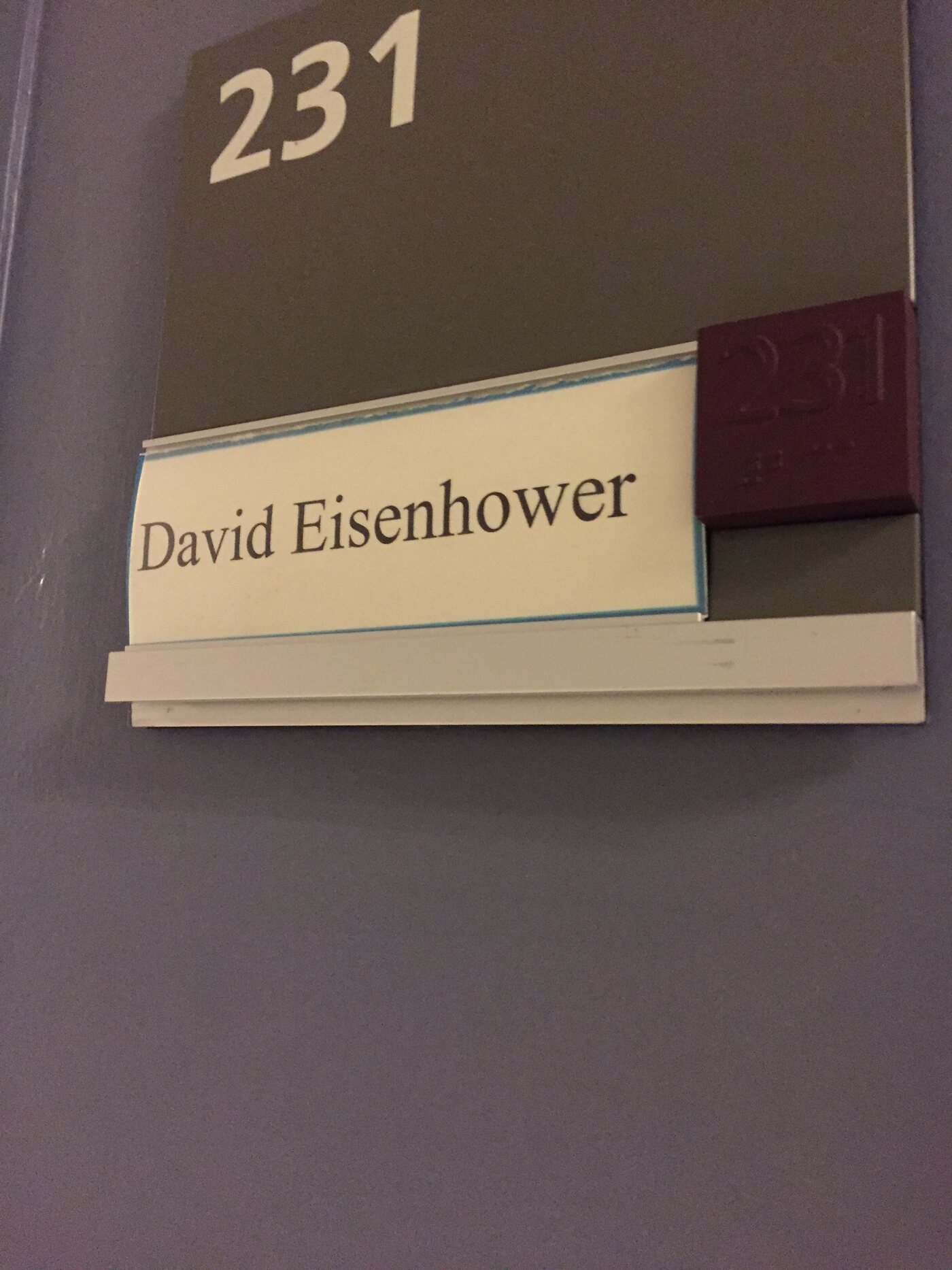 Room 231. You cold-email for months, and then one day you are standing at a door that says David Eisenhower, deciding whether to knock. And on April 13th the phone rang, and it was Bill Anders, the Apollo 8 astronaut who took Earthrise, the most famous photograph of our planet ever made.
Leon Panetta, Secretary of Defense and before that Director of the CIA, spoke with us about American foreign policy in international zones. So did Edwin Meese, Reagan’s Attorney General, who had opposed the Law of the Sea Treaty and handed us our best counterarguments.
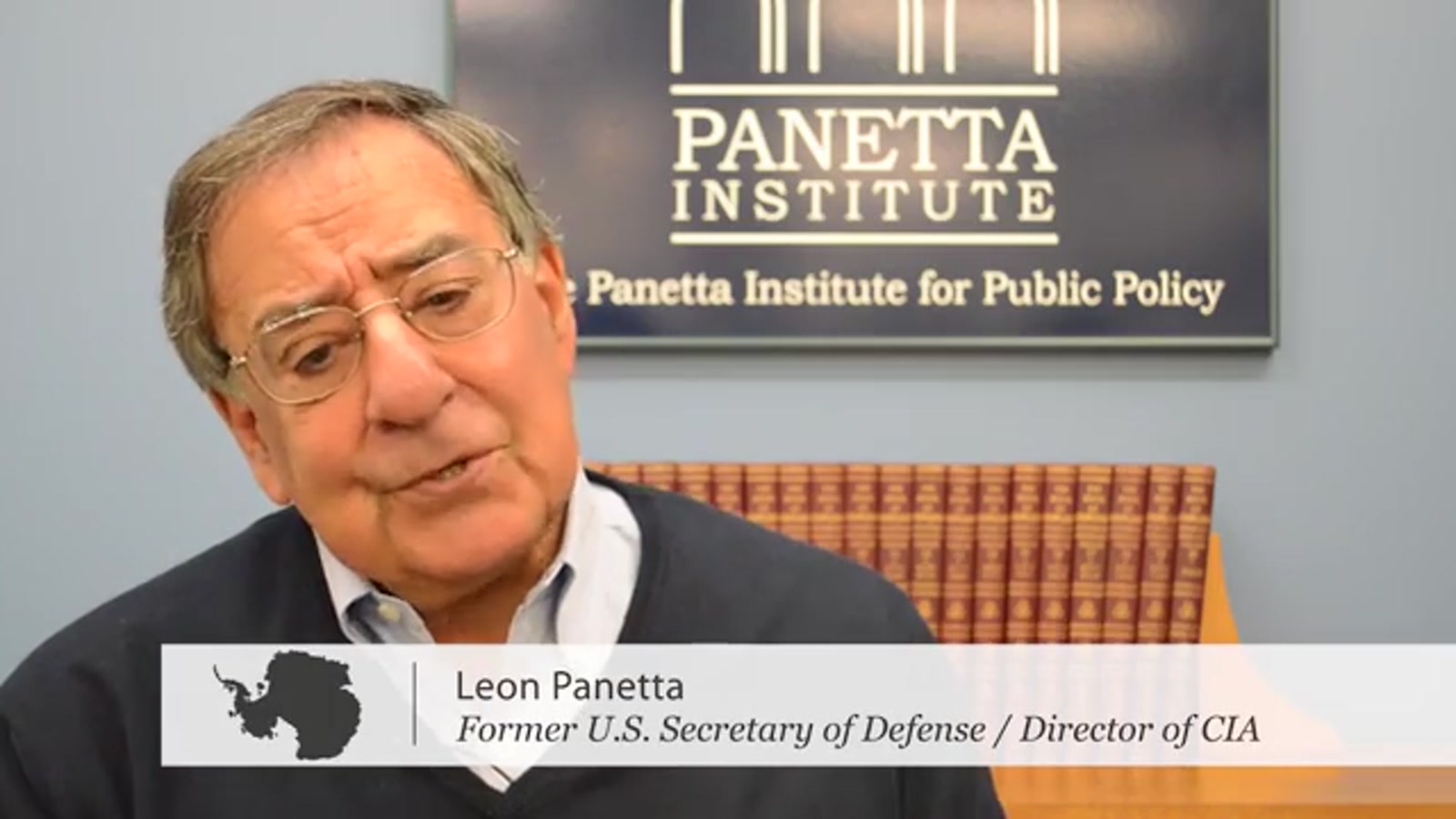 The Secretary of Defense, in the film, in front of his own institute’s backdrop — exactly where the confirmation email said he’d be. Read the lower-third and then remember that the crew operating the camera was three high school juniors.
By the end, the interview list ran past a dozen: a historian of the treaty, five scientists who had worked in Antarctica,4 two former cabinet members, three attorneys, the first U.S. Marshal ever posted to Antarctica,5 an astronaut, a Khrushchev, and an Eisenhower.
There was a ritual attached to that list. Every time we closed one, I emailed our history teacher with the name and a still off the footage — no commentary, just the thumbnail and who it was. It became a running scoreboard between us for about two months.
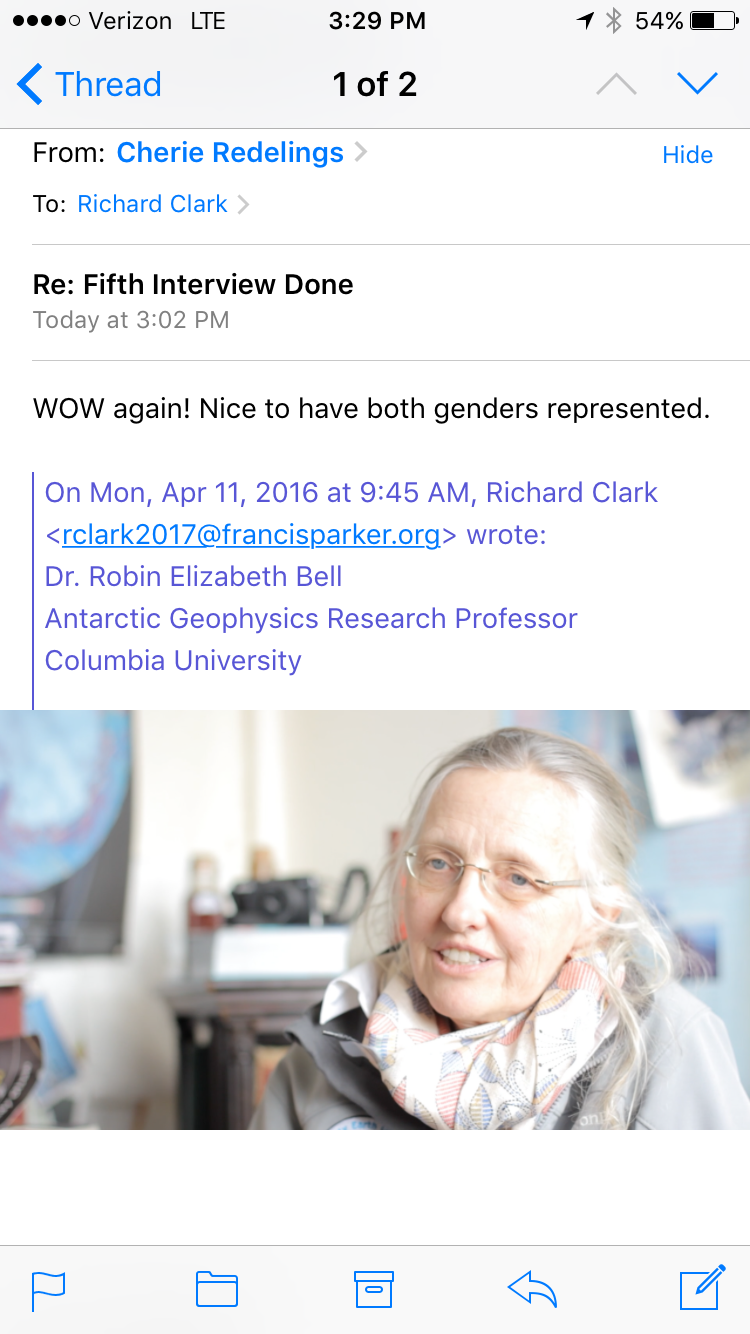 The fifth one. My entire email is a name, a title, and a frame grab; hers is five words, and the first one is “again.”
An astronaut, a SecDef, and a Khrushchev is just the part that fits in a title. The film’s closing card is the full roster:
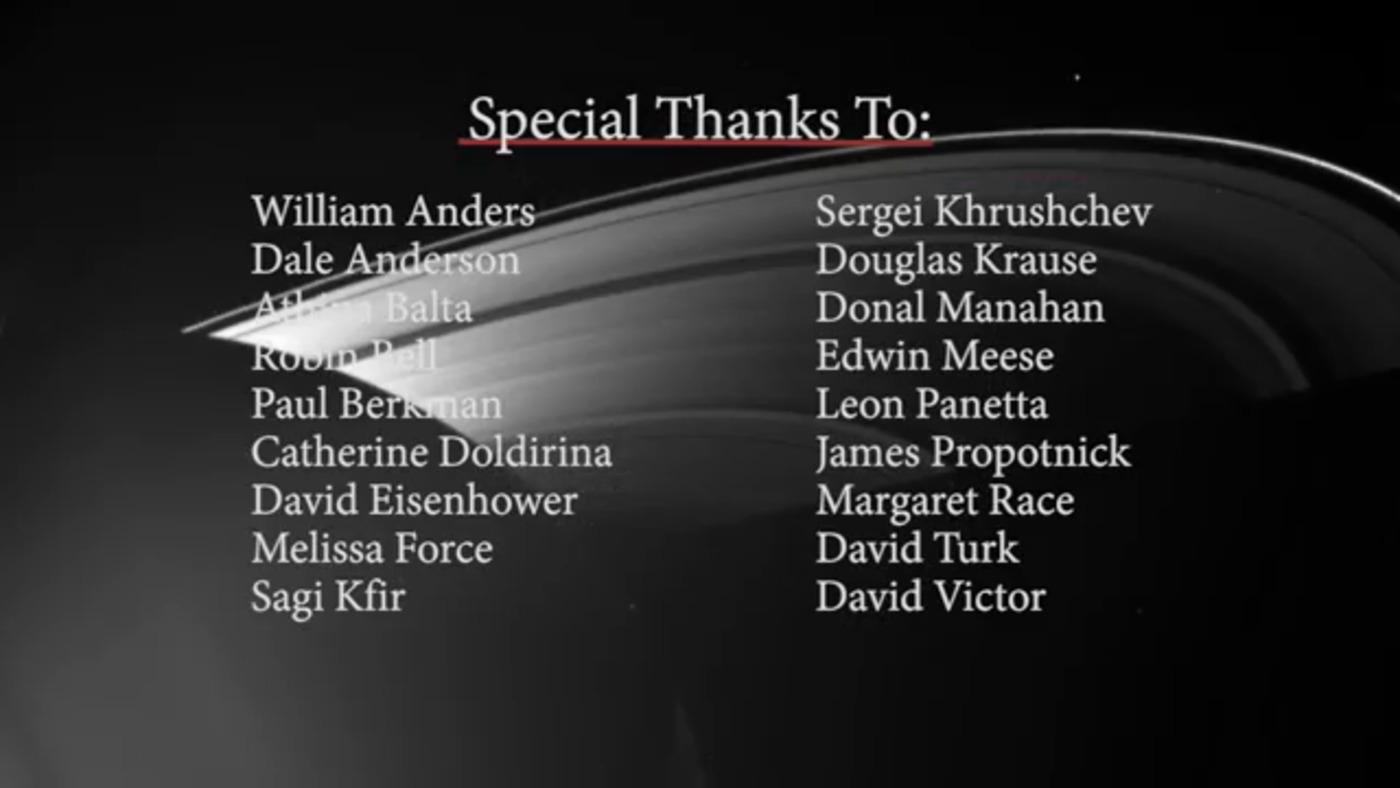 Eighteen names on the thank-you card of a high school documentary. Every one of them answered an email from a teenager.
The real secret is that almost no one cold-emails these people at all. The inbox of a historical figure is emptier than yours.
What they actually said
The interviews were better than the access.
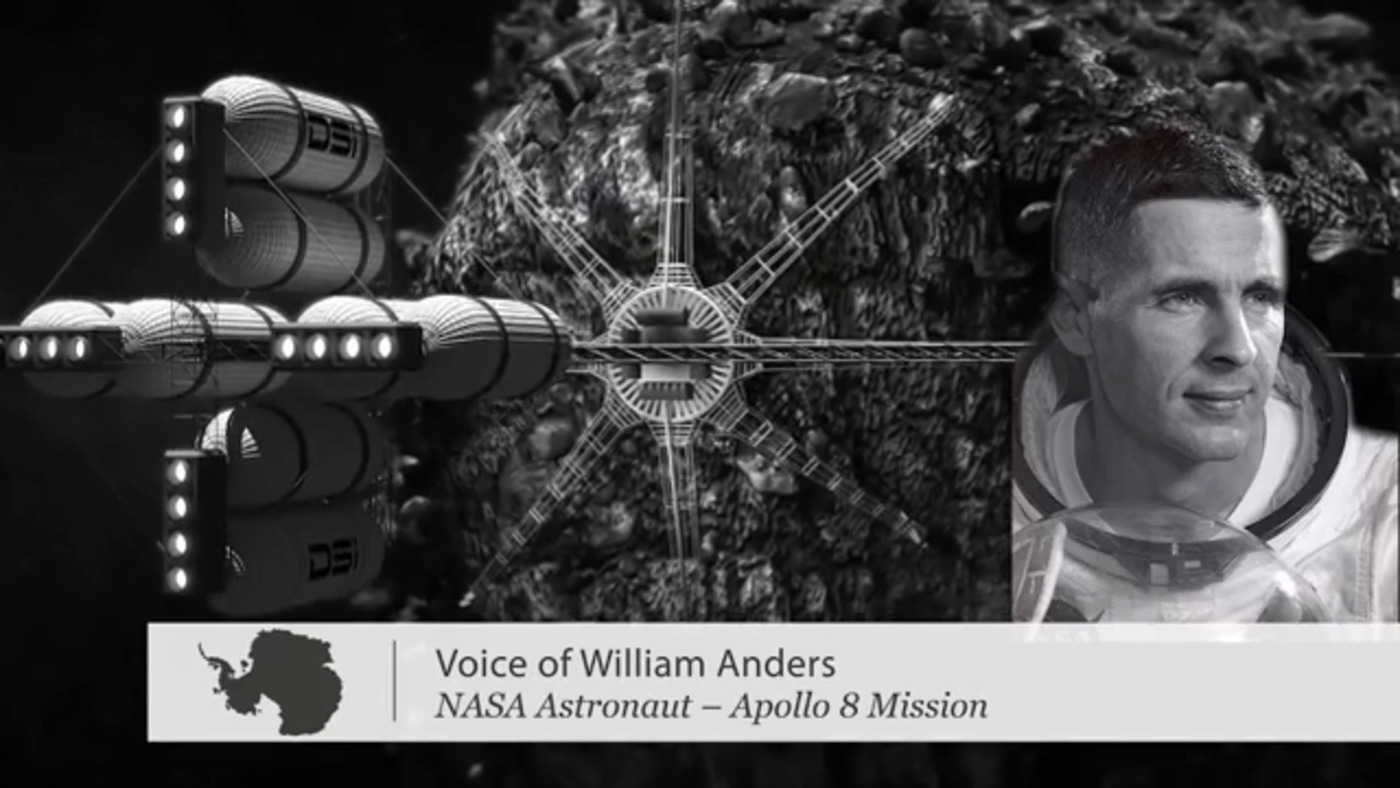 How an audio interview appears in the film: “Voice of William Anders, NASA Astronaut – Apollo 8 Mission.” The man who took Earthrise, on a phone line with three teenagers.
We got Bill Anders on the phone expecting poetry. He took Earthrise. He watched the whole planet rise over the lunar horizon. If anyone was going to be romantic about space, it was him.
I still have the fifty-two minutes of tape, which means I can play you the single most important ninety seconds of the whole project: seventeen-year-old me working up the nerve to put the film’s thesis to him as a question, and then his answer, which is not the one we were fishing for.
Sit with that, because it is a better thesis than the one we walked in with. We had spent months asking whether ownership drives exploration. Anders, who had actually gone, said the deed was never the point. People go where there is something to take. Ownership is just the paperwork you invent afterward to keep it. That reframing is why the Antarctic Treaty works at all: it did not abolish ownership so much as it removed the taking.
He was that blunt about his own mission, too. Here is me handing him a flattering description of Apollo 8, and him declining it:
He also mentioned, almost in passing, that he had been to Antarctica himself. Of course he had.
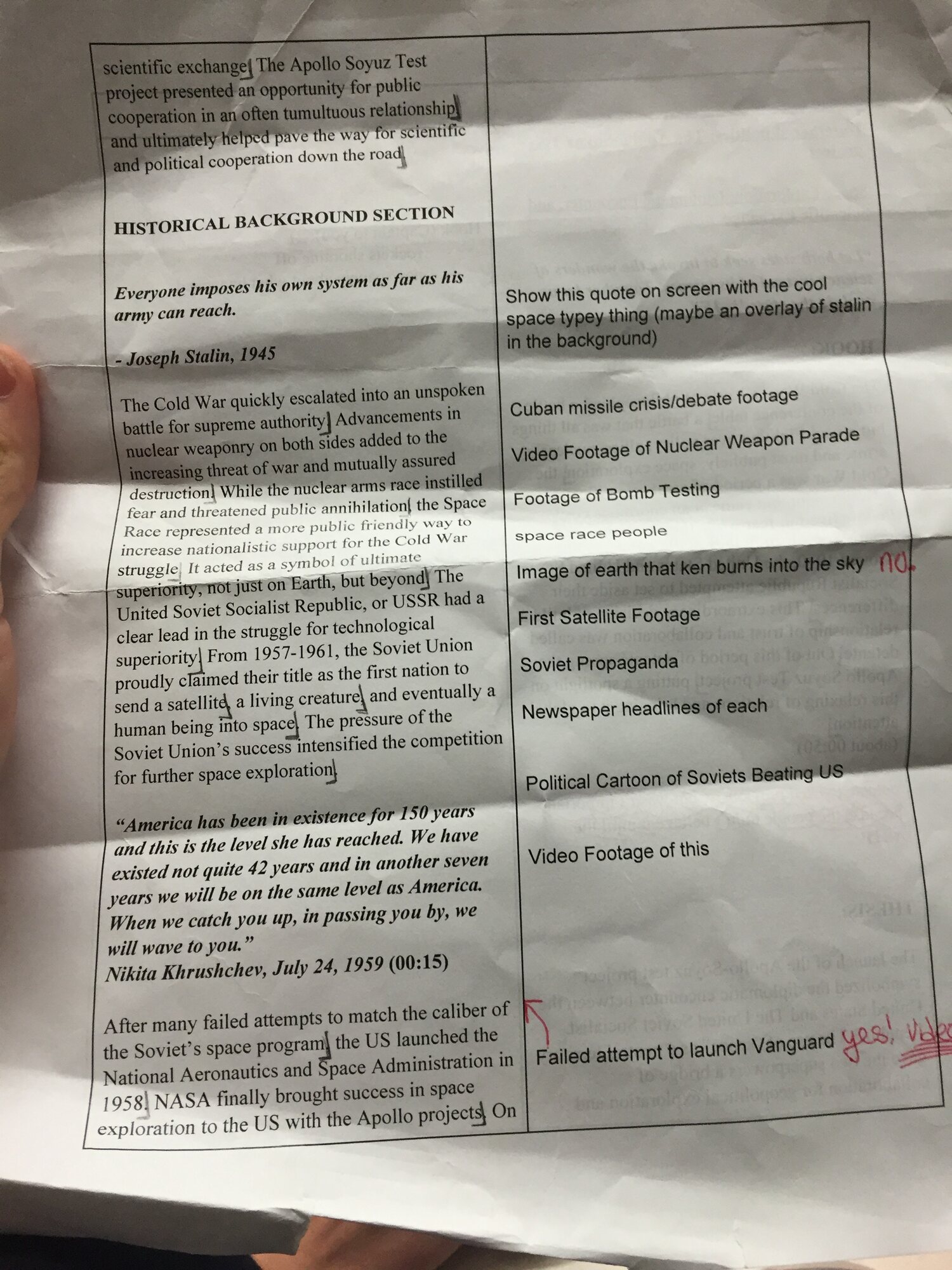 A script page from my camera roll, annotated in the margins — the historical background section, with a Nikita Khrushchev quote from 1959 marked up for the edit. Weeks after this photo, his son sat down with us.
Sergei Khrushchev gave us the other half of the answer. We asked him how the treaty was even possible, how the same powers pointing missiles at each other agreed to share a continent. I can still picture it: he leans back in his chair, nods with a subtle grin, and says one word. “Science.” Science sees no borders. The scientists had been cooperating in Antarctica all along; the treaty mostly wrote down what they were already doing.
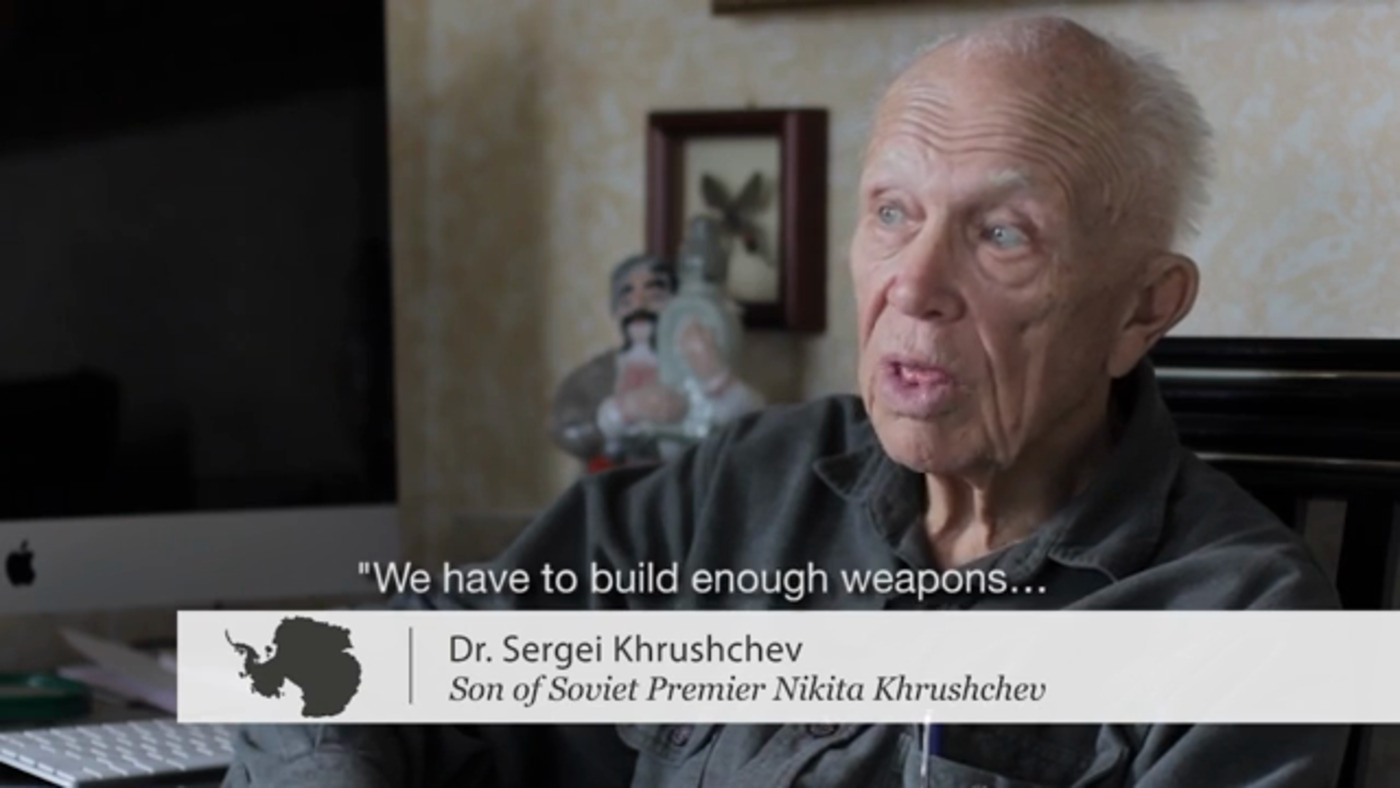 Dr. Sergei Khrushchev in the film, mid-sentence: “We have to build enough weapons…” The lower-third reads Son of Soviet Premier Nikita Khrushchev, which remains the wildest credit any interview of ours has carried.
Put those two answers together and you have the whole documentary. Nations go to space to wave flags. Scientists go to do science. Antarctica is what happens when the second group gets there first and the lawyers follow.
And David Eisenhower gave the film its title. He told us the spirit to explore the physical world has faded since he was young, and he tied that fading directly to the treaties: they set aside “common areas” for science instead of land to be claimed. A sacrifice for otherworldly exploration. We traded ownership for knowledge, and maybe traded away some of the urge to go.
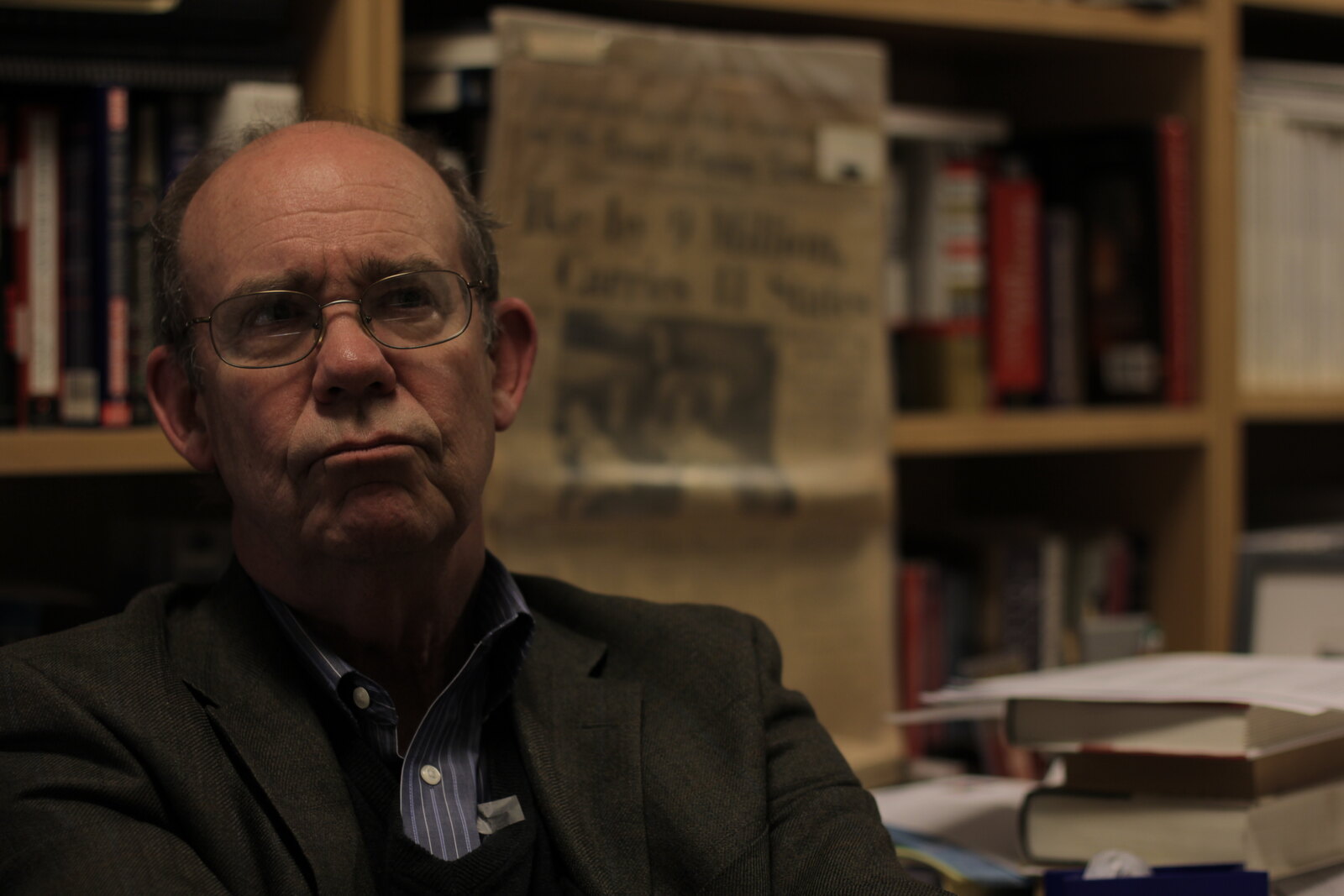 Behind the door. He answered our questions for an hour surrounded by books about his own family, and never once made three teenagers feel like a scheduling error.
Look over his shoulder in that frame. The thing propped on the shelf is a newspaper from November 1956.
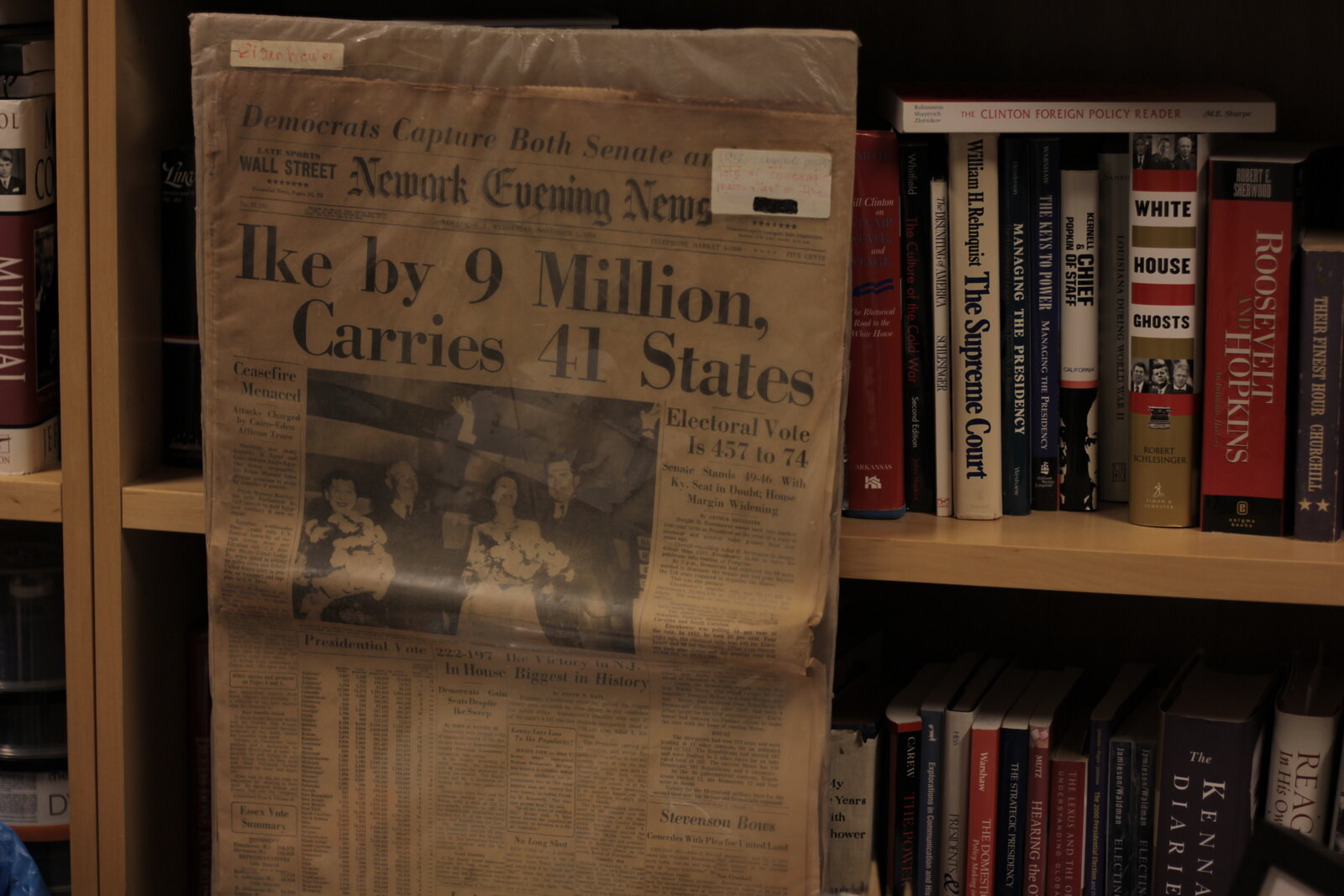 “Ike by 9 Million, Carries 41 States.” His grandfather’s second landslide, kept in a plastic sleeve with a hand-written tab that just says “Eisenhower”, filed on a shelf like any other primary source. Three years after that headline, the man in it signed the Antarctic Treaty.
The result
Here is the four-year scoreboard, honestly: freshman year we were finalists at state. Sophomore year, fourth at state. Junior year — this film — we won the California State History Day competition outright, which in the largest state in the country is not a small pond. Then we flew to nationals in DC, where we went out in the first round. We came home with an Outstanding Entry Award, and for years I led with the award. The first-round exit is the interesting part.
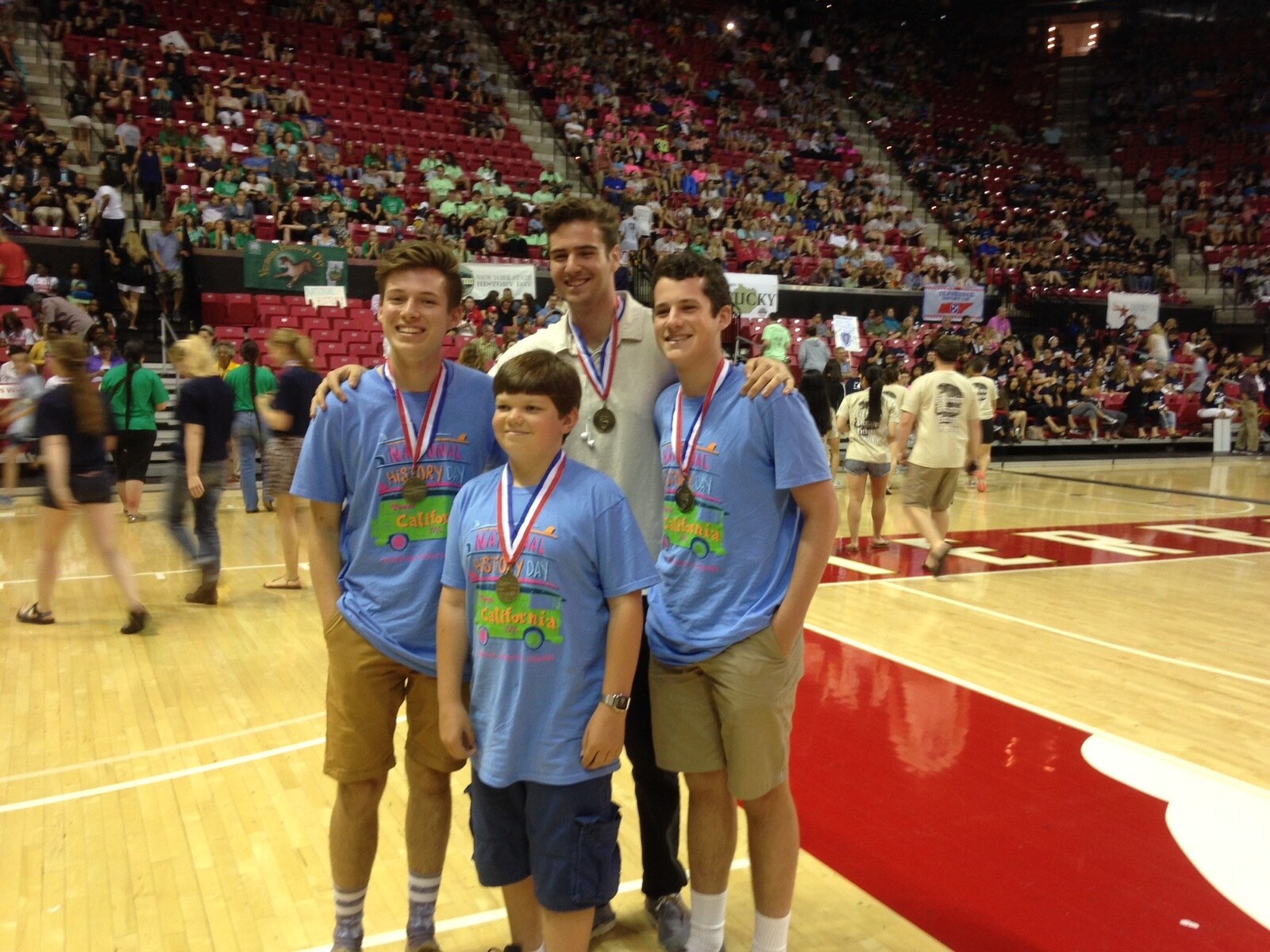 Team California on the floor at nationals, medals on, junior year. This is the photograph I liked enough to make the header of my college website, and it is also a photo of the year we lost in round one. Both things are true of it.
What we broke on the way to nationals
Because here’s the thing: between state and nationals, we revised the film. Both scripts are still in my high school Google Drive, and both cuts still exist on video, so this isn’t memory — it’s a diff.
The state cut opens with a title and then, thirty seconds in, its thesis: the Antarctic Treaty “ushered in a new type of exploration — one focused around science.” The nationals cut deletes that section entirely. In its place: a long archival cold open — newspaper headlines, a Russian documentary about Nazis in Antarctica, six Richard Byrd quotes, and a stage direction that reads, in full, Penguin Noises — before the title even appears. The argument doesn’t fully assemble until the conclusion. It was objectively better filmmaking. It was also worse arguing, in a competition that scores the argument.
We did the same thing to the film’s sharpest idea. The state script lands its criticism section on a clean question — “is exploration always dependent upon ownership?” — and the state cut lands it even harder. Watch what we had, with the sound on:
The nationals script wraps that question in qualifier sentences until it stops sounding like a discovery and starts sounding like a term paper. And we did it visually too: the state cut had a crisp red look; for nationals we went blue, to be “more Antarctica.” Appropriate, thematic, and duller.
I knew it was worse at the time and couldn’t say why. A decade later, with both scripts open side by side, I can: at state we made the film we thought was right; for nationals we made the film we imagined judges wanted. Every edit optimized for fit over force, and sanded off exactly the specificity that had just won. I have watched myself and other people repeat this exact mistake with products ever since. The revision that aims at an imagined audience’s taste loses the thing the real audience already rewarded.
Senior year I ran it back with Adam Nussbaum. The film was “Plessy v. Ferguson: Tipping the Scale,” it won California again, and this time we made the national finals — a ten-film room, a ninth-place finish. Closer.
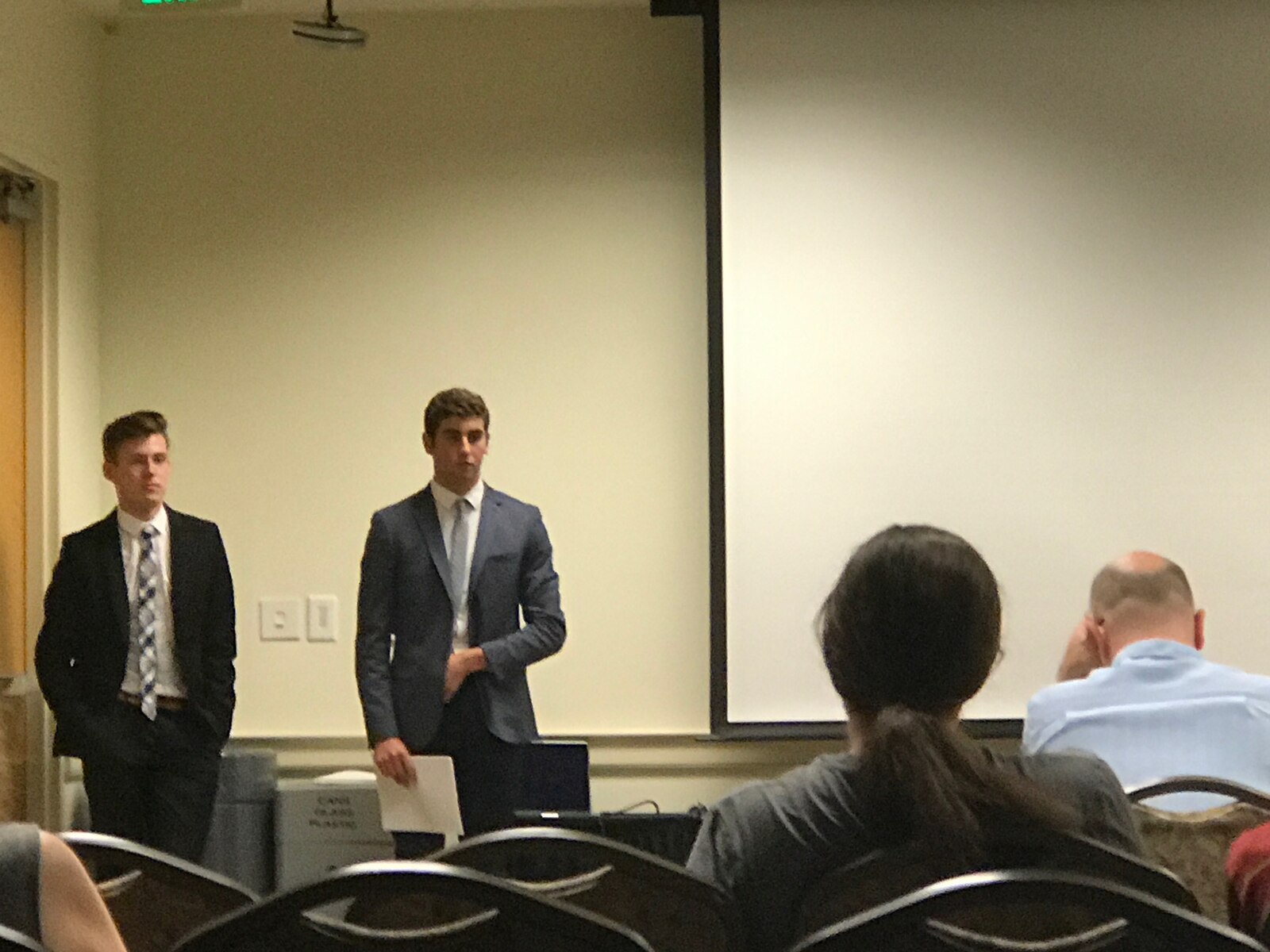 The finals room. You screen the film, then you stand up in front of the board and defend it — process, sources, why this argument and not another one. Ten films made that room in the country. We packed the suits on faith.
And then the trip handed us an ending no scoreboard could. The brand-new National Museum of African American History and Culture screened our Plessy film — in the Oprah Winfrey Theater — and handed us certificates signed by Lonnie Bunch, the museum’s founding director, who went on to run the entire Smithsonian.
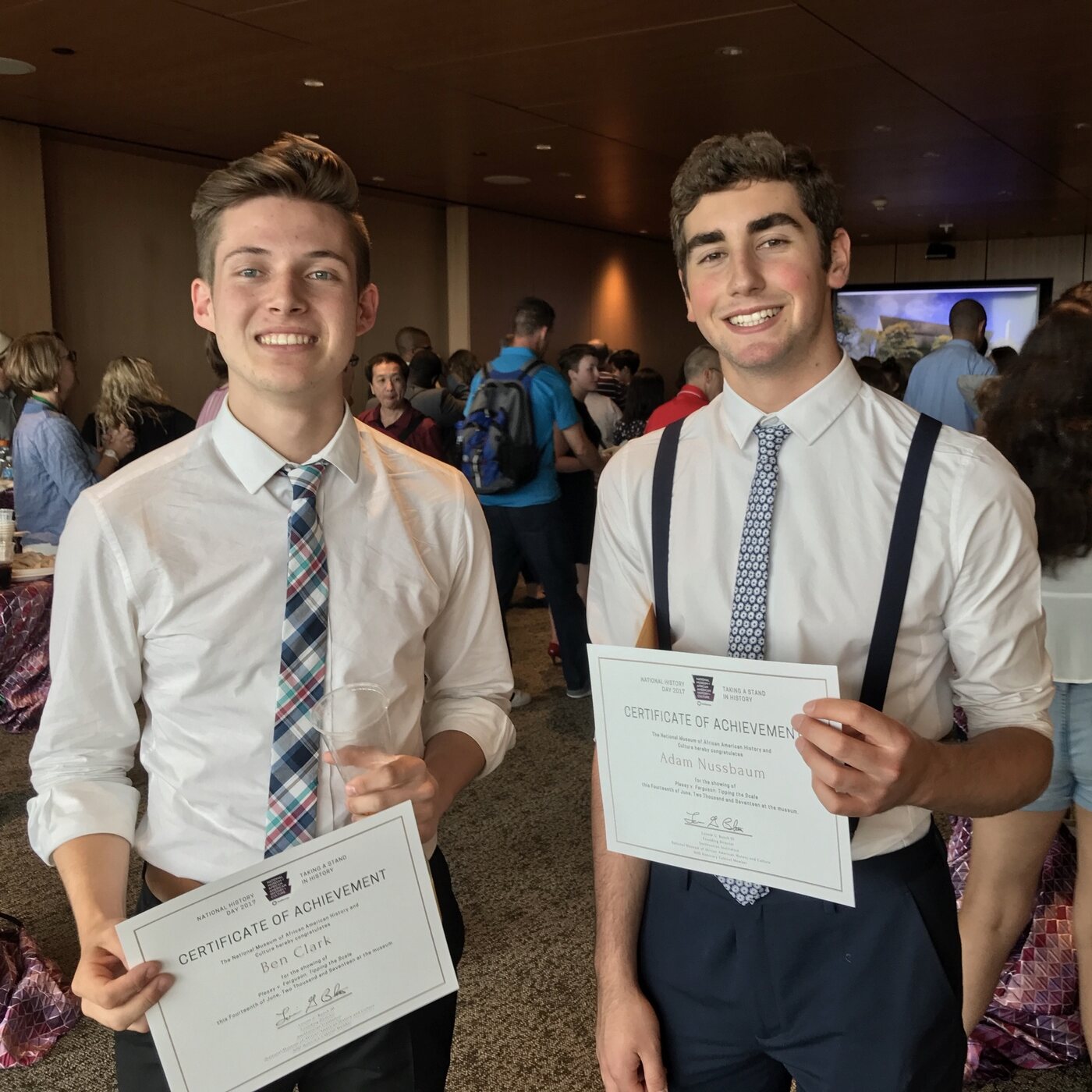 June 14th, 2017: certificates from the National Museum of African American History and Culture “for the showing of Plessy v. Ferguson: Tipping the Scale… at the museum.” Mine still says Ben Clark.
The scoreboard says we never cracked nationals; the scoreboard also says a school film crew got a Secretary of Defense on camera and a Smithsonian screening, so I’ll take the trade.
Here is the film — the state cut, the one this whole post is about, the version with the thesis up front and the red look and the ownership question asked straight.6
The actual lesson
We weren’t special. We were three kids with a school project and a list of email addresses. What we had was the willingness to look slightly ridiculous: every one of those emails felt absurd to send, and the absurd thing kept working, until we had an astronaut, a Secretary of Defense, a Khrushchev, an Eisenhower, and an asteroid lawyer on tape.7 Nobody tells you that the people who made history answer cold emails from high schoolers. They do.
In the thank-you letter to the space lawyer, I wrote that where I used to see the night sky as a canvas for the imagination, I now saw it as a place. A destination. That’s what talking to Bill Anders does to you — even when, especially when, he tells you it was all flag-waving.
Footnotes
-
Nemitz’s valuation, faithfully recorded in our process paper. Platinum prices have moved since. The asteroid has not. ↩
-
It very nearly didn’t happen. The Senate ratified the treaty 66 to 21 after two full days of debate: a two-thirds majority was required, so it passed with eight votes to spare. We put the 1960 newspaper clippings on screen in the film, including a Washington Post headline that read “Antarctic nearly Froze the Senate.” ↩
-
One of the five, Douglas Krause of Scripps, couldn’t meet in person because when we contacted him he was packing for an expedition to Antarctica. Hard to argue with that excuse. ↩
-
James Propotnick. He told us that before roles like his existed, there was so little legal supervision on the continent that someone could in principle shoot another person and face no consequences. We went in thinking the treaty was a finished miracle and came out with a list of its holes. ↩
-
It wasn’t a one-off. We made a History Day documentary every year of high school, and all four are on my YouTube channel: the Bracero Program, W. E. B. Du Bois, the Antarctic Treaty, and the Supreme Court. The same muscle also made “Si Supieras”, shot at a deportee shelter across the border in Mexico. Nobody remembers our editing; the interviews were the education, and the deadline was the forcing function that made us send the emails. ↩
-
The belief compounded, too. The documentary is directly why I spent the next summer at Yale working on near-Earth asteroids, which ended with three of us telling NASA one might hit Earth, and it’s a real part of how I got into Stanford. ↩