One Nikita Bier tweet made me a millionaire
I made my first $1 million pretty unglamorously. I didn’t have a big exit or a TechCrunch article. It came from invoices. And the invoices came, for the most part, from a single tweet. I’ll explain.
Many of my friends from Stanford were celebrating huge raises and monster acquisitions. I was actually doing the kind of work that lots of people in tech look down on: work for clients, contracting. I was building other people’s apps for money, over and over, for years.
I wanted to write this post for a few reasons. Firstly, people ask me about it. Probably the question I get asked most often is how I became a millionaire. And secondly, I think it’s very attainable. It’s hard to say whether large tech exits come from hard work or luck, but I think it’s safe to say that not everyone can achieve them. Contracting, on the other hand, has a very tight correlation between effort and results. I think almost anyone can follow this post to make a million dollars.
Deuce Drone
People have been asking me to build them apps since before I could drive. It started with web apps in high school. A friend’s dad introduced me to one of his friends, who hired me to help him build a social media app. In college, I mostly funded my life with app contracts that came through people I knew.
Peach Blossom Spring, my first company, also started as a contract. In the spring of 2020, Alex Fine and I were living in Oregon during COVID, and Alex got approached by a company called Deuce Drone to build their app.12 He didn’t know how to build an app, and I didn’t really either. I had only ever built websites, so we decided to lock in for a summer, work extremely hard, and learn. We told the client we were one person, just one very competent engineer, and we’d split the money.
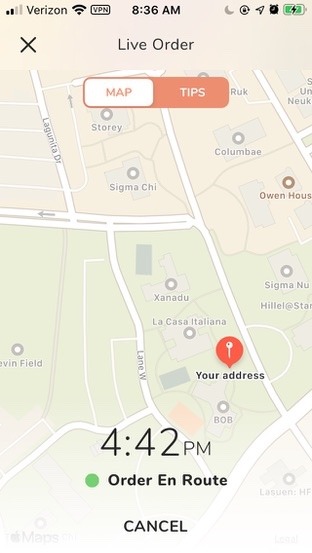
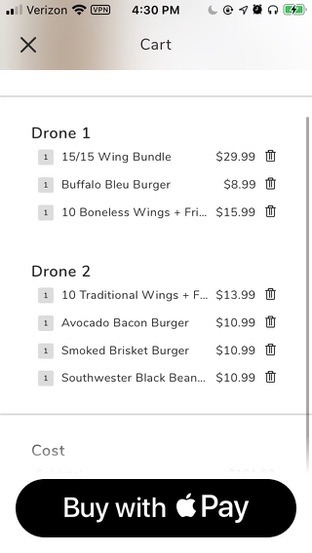
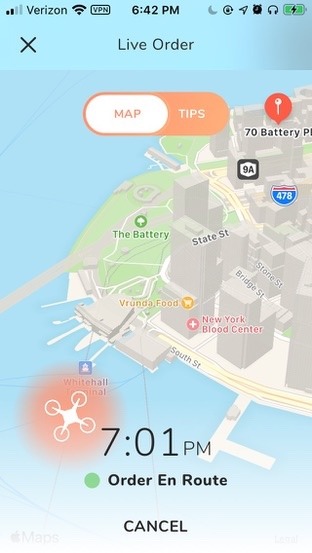
- May 16: Alex adds me as an owner on the Firebase project.
- June 28: Alex invites me to the GitHub repo.
- August 23: TestFlight build 1.0 goes live.
- November 9: An automated email warns us we had committed a Google API key.
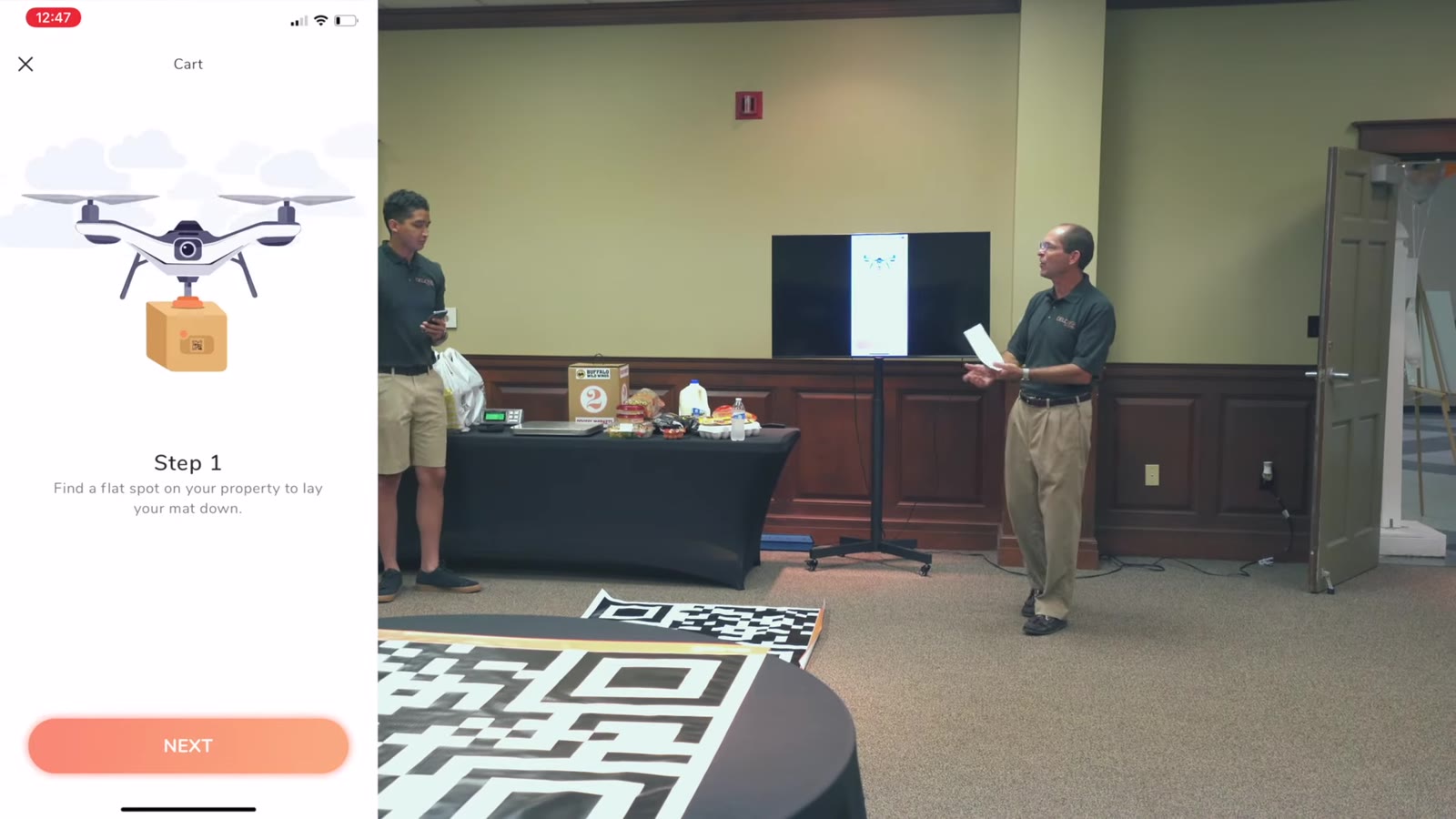 Here is a frame from a film the company made of them demoing the app. You can see a Buffalo Wild Wings box on the table and a landing mat on the floor.
The chain
I always knew that I could build apps on contract, but I really wanted to build my own software, and I spent years trying. By 2024, I was pretty frustrated with tech. Many of the companies I had watched get started were not doing well, and I finally decided to just do the thing everyone had asked me to do the whole time. That became Union Street Studios, and it was originally going to be a joint venture between me and Nick Sarath. Nick came up with the name.


I met Nick through a chain of introductions. In November 2021, Andrew Ziperski texted me. He was working at Callin, David Sacks’s social podcasting app. I was on their beta at the time, constantly filing bug reports and naming the SwiftUI APIs that I knew they were neglecting.

Andrew drove down from San Francisco to get coffee with me at Philz and try to get me to drop out and join. I decided against it. My test was that I had had to put Screen Time limits on X and Instagram because they were so addictive, but I never needed to do that for Callin.3
But Andrew stayed in touch. In December 2022, he texted me again, saying he had a friend from the Stanford Review named Phil Clark who was working at Thrive Capital in New York and wanted to meet an iOS engineer for a side project involving ChatGPT. He connected us the same night.

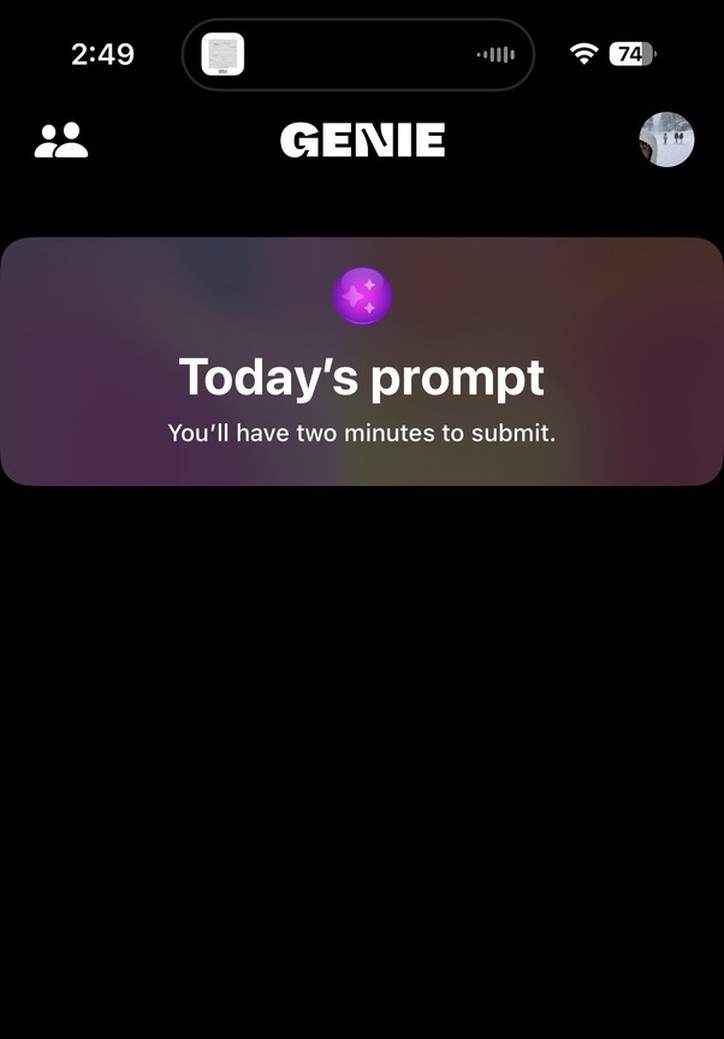
I think Thrive had just seen a wave of AI apps make absurd amounts of money, and Phil, Anuj Mehndiratta, and Nitin Nohria wanted to build one.4 The app ended up being called Genie. Every day, it would send you a notification prompting you to answer a question. Then it would turn your answer into an image and post it onto a feed where all of your friends could like and comment, and you could see other images that they had generated from their responses.
I worked for free on purpose, because I knew the moment I took money, there would be expectations. I wanted them to see the quality and speed that I knew I could deliver from Deuce Drone. Before our first call, I sent Anuj an app I had built for someone else the week prior. Then I pushed Genie’s first TestFlight build on Christmas Day.5

Genie didn’t take off immediately, so Anuj bought an hour with Nikita Bier, who was right in the middle of Gas and too busy to advise full time. Instead, he introduced us to Nick Sarath, a designer he had hired directly out of high school to work with him at Facebook. In February 2023, Anuj introduced Nick and me, adding that “Nick knew about you from swift on tap btw.” We all met in New York that weekend.
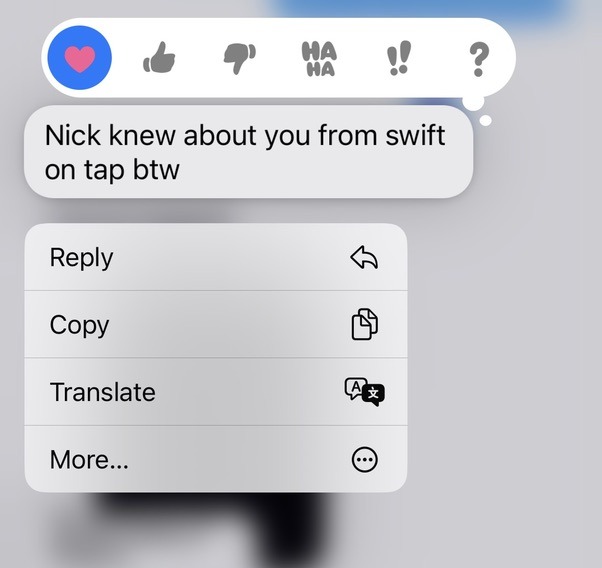 From my camera roll: I screenshotted the intro at the time, blur and all.
Nick and I built Genie 2.0 together, which was a social feed where every photo was fake but had you and your friends’ faces swapped into it. It looked incredible, but it also fizzled. The Thrive guys went back to Thrive and made a fortune on OpenAI. In hindsight, maybe I should have just joined Thrive.
I got a lot out of this experience. I met Nick, who became a collaborator for many years. Nick and I built Wealth Leaderboard, which went nowhere, and then Mindie, which we sold. Anuj kept vouching for me to people who could hire me. Tim Lenardo hired me to build Alias. Adam, who started Mindie with us, hired my company for Launchpoint. Adam also introduced me to Freddie, who made intros to the founders of Coverd and the founder of Polymarket.


The tweet
And then Nick founded Protector, which was the first Union Street contract. It launched in February 2025 at number three on the App Store, and Nikita tweeted about it.6
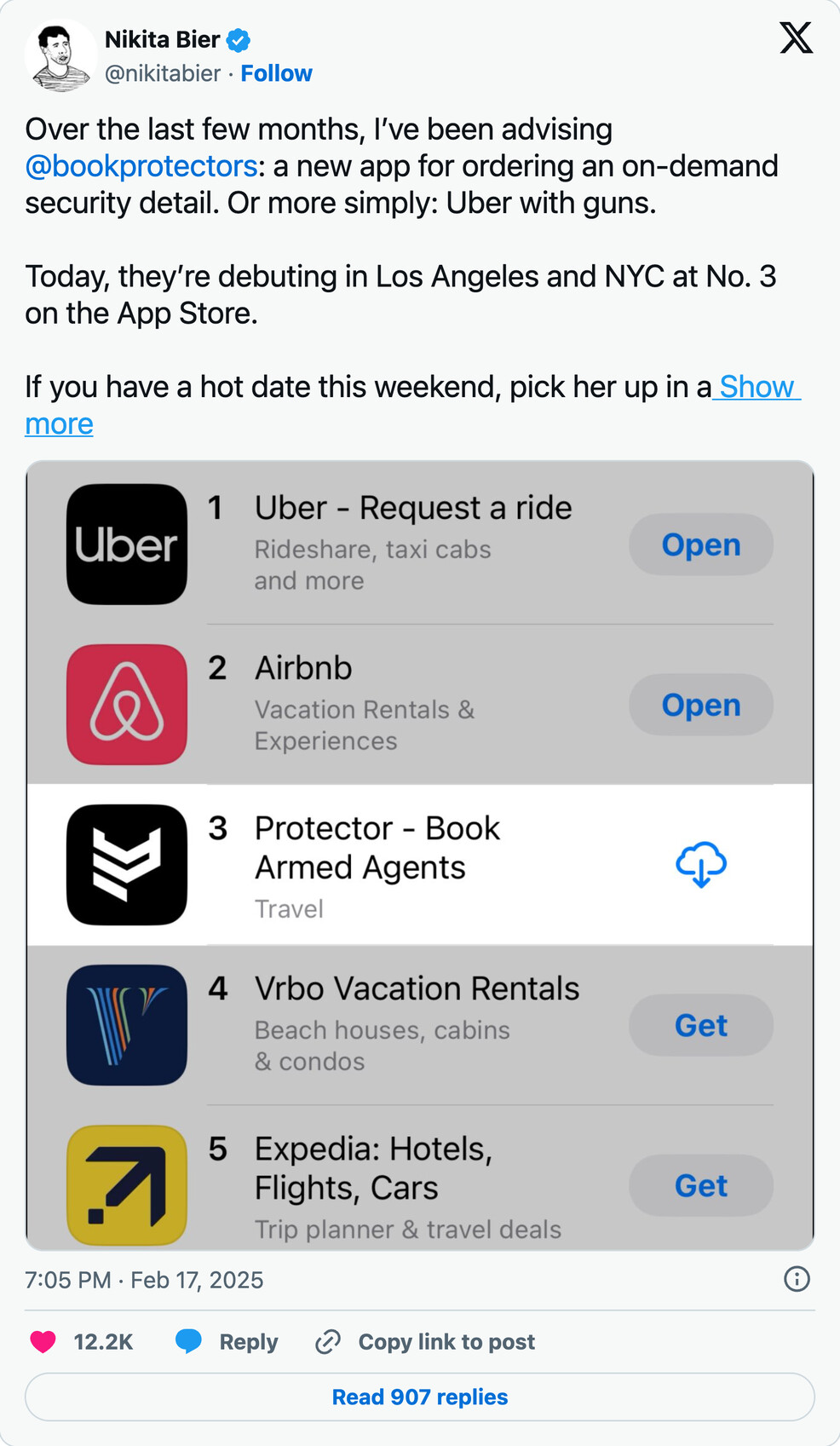 12.2K likes. Nikita’s tweets can get millions of impressions, and this one really hit.
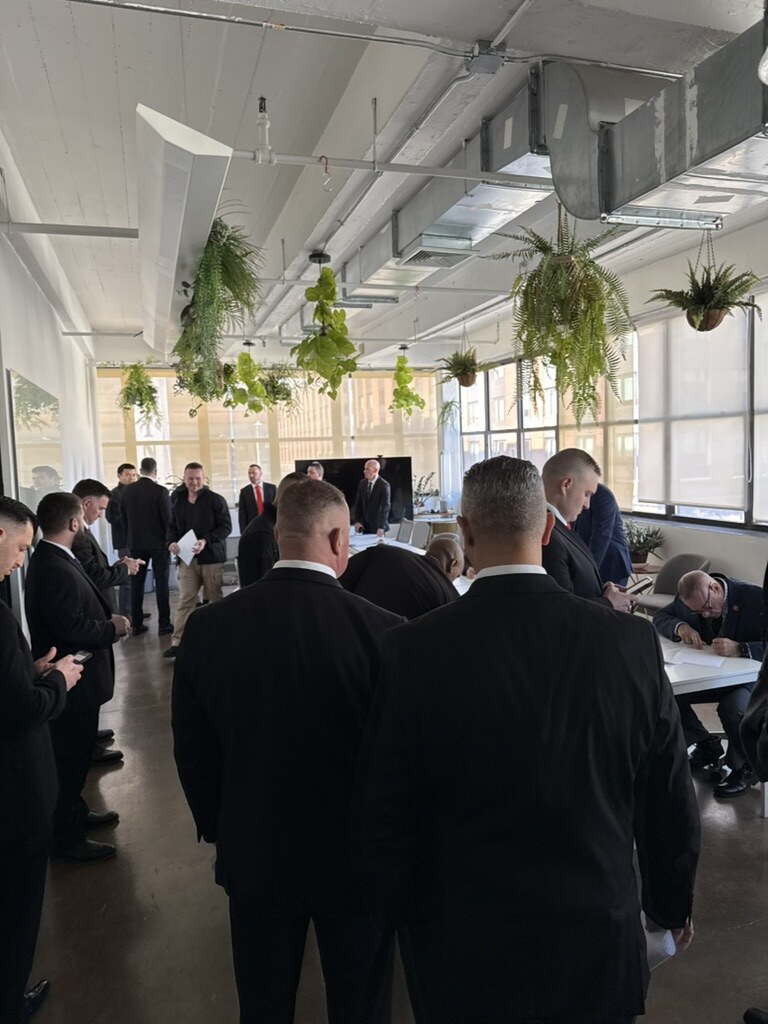 Protector’s office in Brooklyn on launch week. You can see them in the background playing with the app.
And that is the tweet from the title of this post. The app we built was beautiful, and Protector got seen by millions of people. Between TikTok and X, clients started reaching out because they were so impressed. Later, Polymarket did the same thing. The next wave of clients came from people who used their app. Nobody really ever asked me for a pitch deck. Every deal was based on having used and loved an app that I had built.
We raised $0. Contract work can’t get funding, and it doesn’t really need funding. The revenues are the funding. That’s the type of thing that is very normal in the real world but very rare in the tech world.
Over time, our client list grew into something I’m very proud of: Protector, Polymarket, Whop, Physical Intelligence.7 These are real companies making world-changing products, hiring us to build the apps their users interface with. For some of these, like Protector, we built the backend, the frontend, and the website. The whole stack was just me.
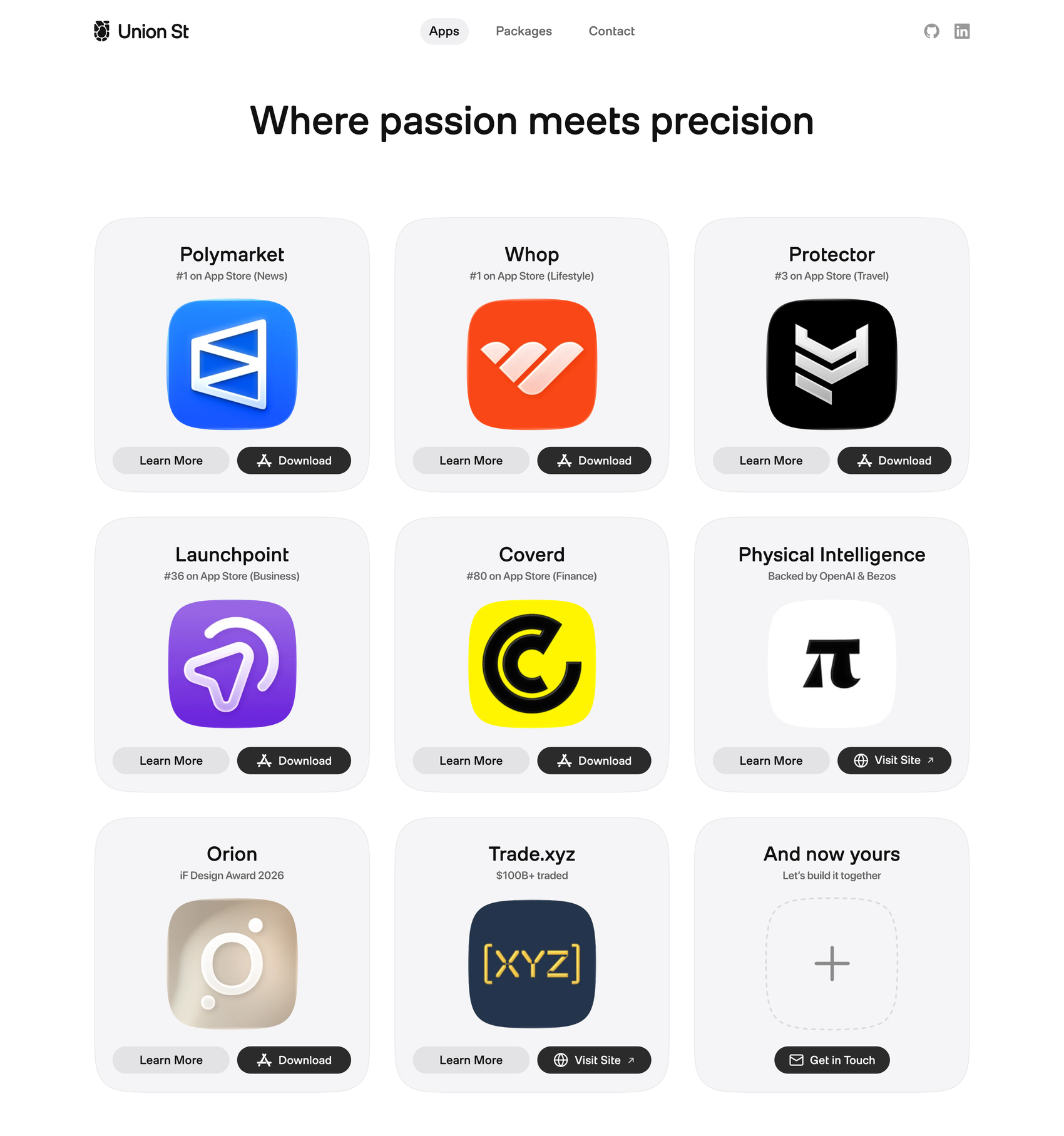 unionst.com, live today.
How to do it yourself
I think almost anyone can follow my process to make a million dollars. It’s basically three steps.
Work for free early, on purpose. Part of why Anuj was so excited about the speed and quality of the app I shipped was because the build hadn’t cost them anything. The second you take money, people expect something out of you, but it’s much easier to overdeliver on a free gig. If that person knows a lot of founders the way the Thrive Capital team does, you can make much more money than the contract would have netted you.
Secondly, be as reliable as you possibly can. Clients are constantly afraid of contractors disappearing, and finding one that’s reliable is very rare. Answer texts immediately and overestimate your costs where you can. Always deliver on time or earlier, even if it requires staying up all night. Maybe half of what clients love about Union Street is that we are so dependable.
Let your work market itself. You don’t have to pitch clients. The best work will do that on its own, I promise.
You have to always be thinking about how the code you write is going to sell itself. Be proud of everything you ship and think about how it’s going to get you more clients. On Polymarket, I built a lot of visual components alongside another engineer who wrote most of the scaffolding.8 I had to think about how the screens people would screenshot could be made as nice as possible so that our work would market itself.
This is the way contracting really can compound. Every project raised the bar of what the next client would be able to trust us to do, and that also raised the rates exponentially. People are willing to pay much, much more for high-quality work.
Ten years in
I don’t want to romanticize contracting, because the upside is capped at what you bill. Nobody is ever that impressed by anything other than the amount of money you make. “Founder” is inherently interesting. “Contractor” is not really, but you make an honest living, and you have the self-identity of knowing that what you’re doing every day is valuable. I can now go to dinner parties and confidently tell people: “I make apps.”
But this didn’t happen overnight. It was dozens of different projects, codebases, domains, and constraints. I worked in prediction markets, hardware, and everything in between. The North Star was always making software that would make people feel amazing, and I learned that by doing it.
So yes, one tweet made me a millionaire, but that is only because there were ten years of other people’s apps leading up to the tweet and coming after the tweet. It wasn’t really the money that was compounding. It was the reps of building apps, gaining taste, gaining speed, and amassing a gigantic pile of components from everything I had learned.
Footnotes
-
Deuce Drone was a drone delivery startup in Mobile, Alabama, that flew lunches from a shopping center to an office tower across town. They had a deal with a regional grocery store chain to do the same thing for groceries. They were a very exciting company to start out working for. ↩
-
The repo is still on GitHub, private. 81 commits in 9 days of August 2020, 52 from Alex and 29 from me. My last commit says, “Made it about as far as I could with search. So long duecy.” ↩
-
Callin was later folded into Rumble, and Andrew went on to Craft Ventures and then General Catalyst. ↩
-
Phil became a partner in 2025. Anuj is a partner too and now runs Thrive Holdings. Nitin was the dean of Harvard Business School for a decade and is Thrive’s executive chairman. The team was pretty OP. ↩
-
I still have Genie’s commit log. December 19, 2022: “Initial commit.” December 25: “Initial testflight build.” January 10: commits at 1:57, 2:36, and 4:01 in the morning. The last one is titled “Janky search.” ↩
-
I just checked the Protector folders:
backend,backend-swift,frontend,site. Yeah, we really did build the whole thing. ↩ -
The contracts directory on my computer has 28 folders in it right now, but these are the most important four, I would say. ↩
-
Credit where it is due. He wrote much of the app scaffolding and lots of screens. I did many of the frontend components and then handed it off to their in-house team. I like to think that we still have our fingerprints on the product. ↩